
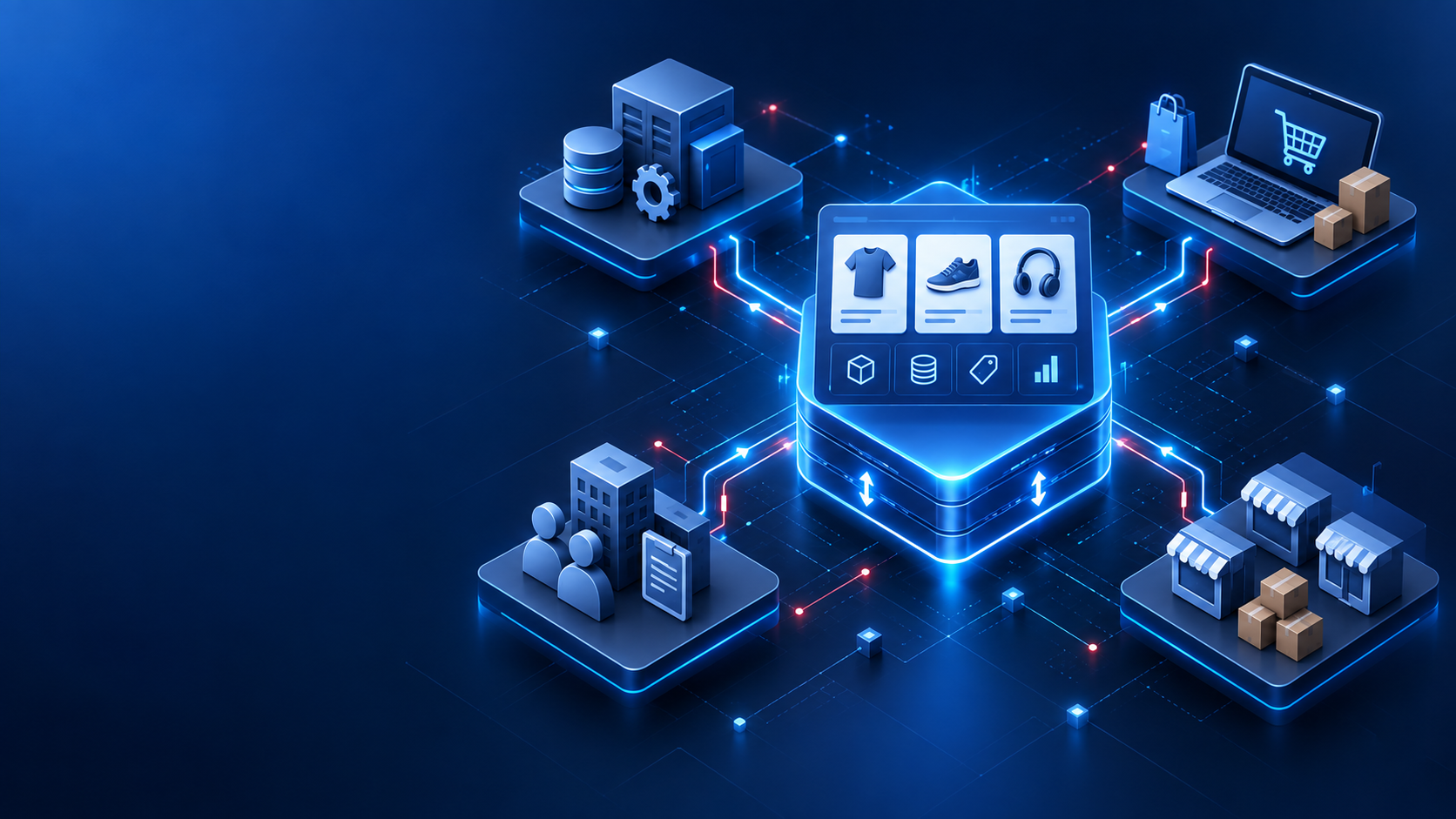
Selling through a webshop, B2B portal and marketplaces should not mean maintaining the same product three or four times. When product data, prices and stock are copied manually between systems, the work grows with every new sales channel and errors become inevitable.
Start with one reliable source for products, prices and stock
For many distributors and retailers, the ERP or existing business system remains the source of truth. A central catalogue can receive the relevant product data from that system and distribute it to the channels where customers buy: the webshop, B2B accounts and selected marketplaces. Product availability and pricing are then maintained where the business already works, instead of being corrected separately in every channel.
B2C and B2B can follow different rules
Retail customers can see standard prices and checkout normally. Logged-in business customers can receive agreed price lists, discounts, minimum quantities, payment terms or catalogue visibility based on their company, customer group, product category or quantity.
Marketplace distribution stays controlled
Not every product needs to be sent to every marketplace. Rules can define which assortment is published to channels such as OLX, Ananas or Mungos, while product details, stock and prices are synchronized from the central catalogue.
A webshop should extend operations, not create another manual process
A useful ecommerce setup reflects the way the company actually sells. Some products can be ordered directly; others need a quote because transport, dimensions, quantity or commercial conditions matter. The system can support both without forcing every product into the same checkout flow. The important part is that the catalogue, customer rules and order process stay connected to the wider business operation.
Synchronization needs ownership, logs and practical exception handling
An integration is not just an import. Before implementation, define which system owns each field, how frequently stock and price changes move, what happens when an update fails and who can review or retry it. Queues, logs and clear mappings make the sales channels dependable rather than a source of hidden discrepancies.
Planning a connected B2B or multichannel sales setup?